Discovering Karllina: The Art of Balanced Elegance
In the vast and often chaotic digital landscape, finding a typeface that strikes the perfect balance between tradition and modernity can feel like searching for a needle in a haystack. Designers and business owners constantly seek fonts that command attention without shouting, offering a sense of sophistication that feels both timeless and fresh. Enter Karllina, a script font that has quietly become a favorite among creators who value impeccable form and contemporary atmosphere. Unlike many display scripts that lean heavily into either extreme thinness or heavy boldness, Karllina offers a unique middle ground that enhances the beauty of any project it touches.
This article explores what makes Karllina distinct, how its specific design features translate into real-world utility, and why it might be the missing piece in your next creative endeavor. Whether you are a graphic designer looking to elevate a brand identity or a small business owner crafting a wedding invitation, understanding the nuances of this typeface is essential for making informed decisions.
The Essence of Karllina's Design Philosophy
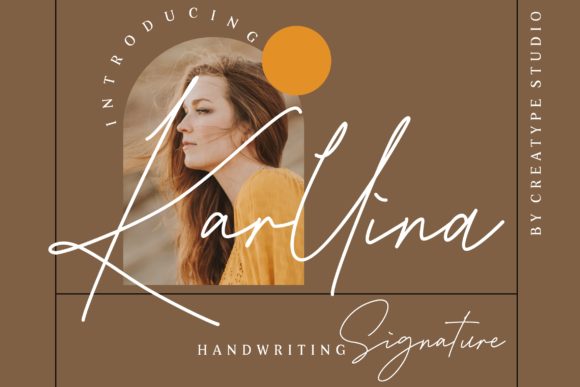
At its core, Karllina is inspired by timeless classic calligraphy, yet it refuses to be bound by the rigid constraints of history. It was designed with a clear purpose: to bring the fluidity of hand-lettering into the digital age while maintaining structural integrity. The most striking characteristic of Karllina is its weight distribution. Many script fonts struggle because they are either too delicate to read at smaller sizes or too thick to convey grace. Karllina avoids these pitfalls entirely.
Not too thin and not too thick, as the designers intended, creates a balanced visual rhythm. This variation allows the letters to breathe, giving the text an organic feel that mimics the natural pressure of a pen on paper. The strokes vary in thickness in a way that feels intentional rather than erratic, providing a "varied" texture that keeps the eye engaged. This balance is crucial for usability; it ensures that the font remains legible even when used in longer passages, a common challenge for script typefaces.
A Contemporary Atmosphere Meets Classic Roots
While the inspiration is rooted in the past, the execution is undeniably modern. The "contemporary atmosphere" mentioned in its description refers to how Karllina interacts with current design trends. It pairs effortlessly with clean sans-serif headers or minimalist layouts, bridging the gap between old-world charm and new-world efficiency. This versatility means it isn't limited to just one genre of design. You won't find it stuck solely in the realm of vintage posters; instead, it shines in tech startups seeking a human touch, luxury fashion brands wanting approachability, and lifestyle blogs aiming for authenticity.
The font's ability to maintain its character across different mediums is a testament to its robust engineering. Whether rendered on a high-resolution mobile screen or printed on textured cardstock, the forms hold their shape. This reliability is a key factor for professionals who cannot afford the frustration of a font that looks good on a desktop but falls apart on a client's phone.
Unlocking Potential with PUA Encoding
One of the most technical yet user-friendly aspects of Karllina is its encoding method. The font utilizes PUA (Private Use Area) encoding, a feature that often confuses users until they experience the benefits firsthand. In simple terms, PUA encoding allows for a much richer set of glyphs and swashes than standard Unicode characters typically provide.
For the average user, this translates to ease of access. Instead of navigating complex menus or using specialized software plugins to insert alternate letterforms, the full range of the font's capabilities becomes immediately available. You can access all the decorative swashes, ligatures, and stylistic alternates with a simple click or keystroke. This accessibility democratizes advanced typography, allowing non-experts to create professional-looking designs without needing deep knowledge of OpenType features.
- Seamless Integration: Because the glyphs are encoded efficiently, switching between standard characters and decorative variants is instant.
- Expanded Vocabulary: The inclusion of extensive swashes gives designers more tools to customize the flow of text, ensuring no two lines look exactly alike.
- Cross-Platform Consistency: When properly installed, PUA-encoded fonts often behave predictably across different operating systems, reducing compatibility headaches.
This feature alone elevates Karllina from a standard decorative font to a comprehensive design system. It empowers creators to experiment with layout and hierarchy, adding emphasis or flair where needed without breaking the overall aesthetic of the document.
Practical Applications Across Industries
So, where does Karllina truly shine? The answer lies in its adaptability. Because it balances elegance with readability, it fits into a wide array of scenarios. Let's look at some concrete examples of how different users leverage this font.
Weddings and Events
The most obvious application is in the event industry. Wedding invitations, place cards, and programs require a tone of celebration and intimacy. Karllina's flowing lines evoke the feeling of a handwritten note, which adds a personal touch that mass-produced templates lack. However, unlike some overly ornate scripts, Karllina remains readable enough for guests to easily decipher addresses and times, a critical practical consideration.
Branding and Packaging
For businesses, particularly those in the food and beverage, cosmetics, or artisanal goods sectors, packaging is a primary marketing tool. A logo or product label featuring Karllina can instantly signal quality and craftsmanship. Imagine a boutique coffee shop using Karllina on their bean bags to suggest a premium blend, or a skincare line using it on their bottle labels to imply natural ingredients. The font's balanced weight ensures it doesn't get lost against busy background images or intricate patterns.
Digital Content and Social Media
In the realm of online content, visual hierarchy is everything. Bloggers and content creators often use Karllina for pull quotes, section headers, or featured titles. Its contemporary feel prevents it from looking dated, while its script nature breaks up the monotony of blocky body text. When used sparingly, it draws the reader's eye to key messages, enhancing engagement rates.
Evaluating Suitability for Your Project
Before downloading and integrating Karllina into a project, it is wise to consider a few factors. While the font is versatile, it is not a universal solution for every single typographic need. Understanding its strengths and limitations will help you avoid potential pitfalls.
The Strengths:
The primary strength of Karllina is its emotional resonance. It conveys warmth, creativity, and attention to detail. If your goal is to make the viewer feel something—whether that is excitement, romance, or trust—Karllina is an excellent vehicle for that emotion. Furthermore, its PUA encoding makes it a powerful tool for customization, allowing for unique variations that stand out in a sea of generic fonts.
The Considerations:
However, like all script fonts, Karllina should not be used for long blocks of body text. Even with its balanced weight, reading large amounts of cursive text can cause eye strain and reduce comprehension. It is best reserved for headlines, captions, logos, and short phrases. Additionally, while the PUA encoding is convenient, it requires proper installation and font management on the user's end to ensure the special characters render correctly. For web projects, embedding the font correctly via CSS is necessary to guarantee that clients see the intended swashes and glyphs.
Who Benefits Most?
This font is ideal for individuals who want to inject personality into their work without sacrificing professionalism. It suits the freelance designer who needs a reliable go-to script, the entrepreneur building a personal brand, and the marketer creating seasonal campaigns. It is less suitable for highly technical documents, legal contracts, or interfaces where absolute clarity and neutrality are paramount.
Making the Right Choice
Selecting a typeface is rarely about finding the "best" font in isolation; it is about finding the right fit for a specific context. Karllina occupies a sweet spot in the market, offering the sophistication of classic calligraphy with the practicality required for modern design. Its balanced stroke width ensures it is neither too fragile nor too heavy, while its PUA encoding provides the depth needed for detailed work.
When evaluating whether Karllina belongs in your toolkit, ask yourself: Does my project need a touch of elegance? Do I need a font that feels handcrafted but renders cleanly on screens? If the answer is yes, then Karllina is likely a strong candidate. By leveraging its unique characteristics, you can create visuals that not only look beautiful but also communicate your message effectively.
In a world saturated with generic options, choosing a font like Karllina demonstrates a commitment to quality and thoughtfulness. It shows that you care about the details, from the curve of a 'g' to the flourish of a final swash. As you move forward with your next project, consider how this elegant script can transform your ideas into tangible, memorable experiences for your audience.