Gading: A Strategic Asset for Whimsical Brand Narratives
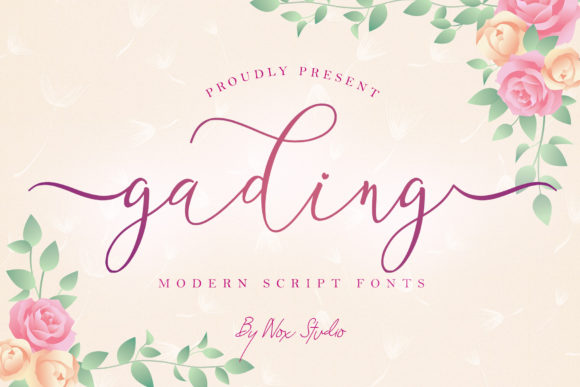
In the crowded digital landscape, where clarity often battles against noise, typography serves as a silent but powerful communicator. Gading emerges not merely as a decorative typeface but as a strategic tool designed to inject personality without sacrificing readability. This whimsical script font, characterized by its relaxed theme and lovely style, offers a distinct advantage for professionals who understand that visual tone is as critical as the message itself. For entrepreneurs, marketers, and creators aged 20 to 50, the decision to adopt a specific font family is rarely about aesthetics alone; it is about alignment with brand positioning and user experience goals.
The core value of Gading lies in its balance. It avoids the extreme rigidity of formal serif fonts while steering clear of the chaotic illegibility often found in casual scripts. Its characters are beautifully constructed and well-balanced, creating a visual rhythm that guides the reader's eye naturally. This equilibrium makes it compatible with a wide pool of designs, allowing it to bridge the gap between professional credibility and approachable warmth. When deployed with intention, Gading can transform a standard business communication into an engaging narrative, fostering a deeper connection with your audience.
Strategic Alignment: When to Deploy a Relaxed Tone
Choosing the right typography requires a deep understanding of your objectives. If your goal is to project authority in high-stakes legal or financial sectors, a rigid sans-serif might be the prudent choice. However, if your strategy involves building community, encouraging creativity, or humanizing a brand, Gading becomes a vital asset. The relaxed theme of this font signals to the viewer that they are entering a space of comfort and openness. This psychological cue is particularly effective for small business owners, freelancers, and educators looking to reduce barriers between themselves and their clients.
Consider the scenario of a lifestyle blogger or a creative agency pitching a campaign. In these contexts, the content is often personal and emotive. Using a standard corporate font can create a disconnect, making the message feel sterile. By integrating Gading into headlines or key messaging, you align the visual form with the emotional substance of the content. This consistency reinforces trust. Trust is built when every element of your design speaks the same language.
Furthermore, Gading supports long-term branding efforts by offering versatility. Because it matches a wide pool of designs, it can serve as a primary display font in one context and a subtle accent in another. This flexibility allows brands to maintain a cohesive identity across various touchpoints, from social media graphics to printed brochures, without appearing repetitive or stale.
Enhancing Customer Experience Through Typography
User experience (UX) extends beyond interface functionality; it encompasses the emotional response elicited by visual elements. A font like Gading, with its lovely style, can significantly improve the perceived quality of a digital product. When users encounter a well-designed interface that uses balanced characters, their cognitive load decreases. They do not have to struggle to decipher the text, which leads to a smoother interaction flow.
For decision-makers focused on conversion rates and customer retention, this reduction in friction is invaluable. A relaxed font can lower the intimidation factor of complex forms or lengthy terms of service, making them more palatable to the average user. It suggests that the company behind the screen values ease and accessibility. This subtle shift in tone can lead to higher engagement metrics and improved customer satisfaction scores.
Operational Efficiency and Technical Accessibility
Beyond the aesthetic and psychological benefits, Gading offers practical advantages that streamline operations for designers and developers. The fact that this font is PUA encoded is a significant technical differentiator. Private Use Area (PUA) encoding ensures that all glyphs, including swashes and alternate characters, are accessible with ease. This feature eliminates the common frustration of missing characters or broken layouts that plague many open-source or poorly encoded typefaces.
For marketing teams managing large-scale campaigns, time is a currency. Dealing with font rendering issues can derail timelines and compromise the final output. With Gading, the workflow remains uninterrupted. Designers can access the full range of stylistic options without needing to manually map characters or worry about compatibility across different operating systems. This reliability translates directly into productivity, allowing teams to focus on strategy rather than troubleshooting technical glitches.
- Rapid Prototyping: Access to a complete glyph set allows for faster iteration during the design phase.
- Cross-Platform Consistency: PUA encoding ensures that the font renders correctly on web, mobile, and print environments.
- Scalability: The ability to use swashes and alternates easily means the font can adapt to various sizes without losing its character.
The Role of Swashes in Visual Hierarchy
The inclusion of swashes in Gading provides additional layers of control over visual hierarchy. In a world saturated with information, drawing attention to specific elements is crucial. Swashes can be used to highlight key dates, special offers, or call-to-action buttons, guiding the user's attention exactly where the designer intends. This level of granular control is essential for achieving better results in advertising and promotional materials.
However, the use of swashes must be deliberate. Overuse can lead to visual clutter, undermining the very clarity the font aims to provide. The experienced practitioner knows that restraint is often more powerful than excess. Use swashes to punctuate important moments in your narrative, not to decorate every line of text. This strategic application ensures that the whimsy of Gading enhances the message rather than distracting from it.
Risks and Mitigation Strategies
While Gading is a versatile and powerful tool, relying on it without clear goals presents risks. The primary danger lies in misalignment. A whimsical script font can appear unprofessional if applied to contexts that demand strict seriousness. For instance, using Gading for a medical disclaimer or a technical specification sheet could erode credibility. The relaxed theme might inadvertently signal a lack of rigor or attention to detail.
To mitigate these risks, always start with a clear definition of your communication goals. Ask yourself: What emotion am I trying to evoke? Who is my audience, and what are their expectations? If the answer points towards a need for formality and precision, Gading may not be the appropriate choice. Conversely, if the goal is to build rapport and foster a sense of community, Gading is likely an excellent fit.
Another consideration is legibility at small scales. While Gading features beautiful and well-balanced characters, script fonts can sometimes lose clarity when scaled down too much. Before committing to a design, test the font across various sizes and devices. Ensure that the intricate details of the letters remain distinct and readable on mobile screens, where a significant portion of traffic originates.
Intentional Application for Long-Term Value
Achieving long-term success in branding and marketing requires consistency and intention. Randomly selecting fonts based on current trends is a recipe for a disjointed brand identity. Instead, view Gading as part of a broader design system. Establish guidelines for its usage that define where it fits, how it interacts with other typefaces, and what role it plays in your visual language.
For educators and publishers, Gading can be a valuable resource for creating learning materials that feel inviting rather than daunting. By softening the visual presentation of educational content, you can encourage students to engage more deeply with the material. Similarly, hobbyists and content creators can leverage the font to express their unique voice, distinguishing their work in a saturated market.
The strategic deployment of Gading ultimately comes down to understanding the nuance of communication. It is not just about making things look pretty; it is about facilitating better connections and driving meaningful outcomes. When used thoughtfully, this font supports planning, creativity, and operational efficiency. It allows professionals to communicate with a tone that is both relaxed and authoritative, striking the perfect balance for modern audiences.
As you move forward with your projects, consider how Gading can elevate your work. Evaluate your current design choices through the lens of strategic intent. Does your typography support your goals? Does it resonate with your audience? By answering these questions honestly, you can make informed decisions that lead to superior results. Remember, the best design is invisible; it works seamlessly to convey your message, and Gading, with its balanced characters and accessible encoding, is ready to serve that purpose effectively.
In conclusion, Gading represents more than just a font choice; it is a strategic decision that can enhance your brand's narrative, improve user experience, and streamline your design workflow. Whether you are a seasoned marketer or a budding entrepreneur, incorporating this whimsical script into your toolkit can provide the edge needed to stand out. Approach it with care, respect its capabilities, and let its lovely style guide your audience toward a deeper understanding of your vision.